
Why Does My Trim Keep Rotting Even After It's Been Repaired?
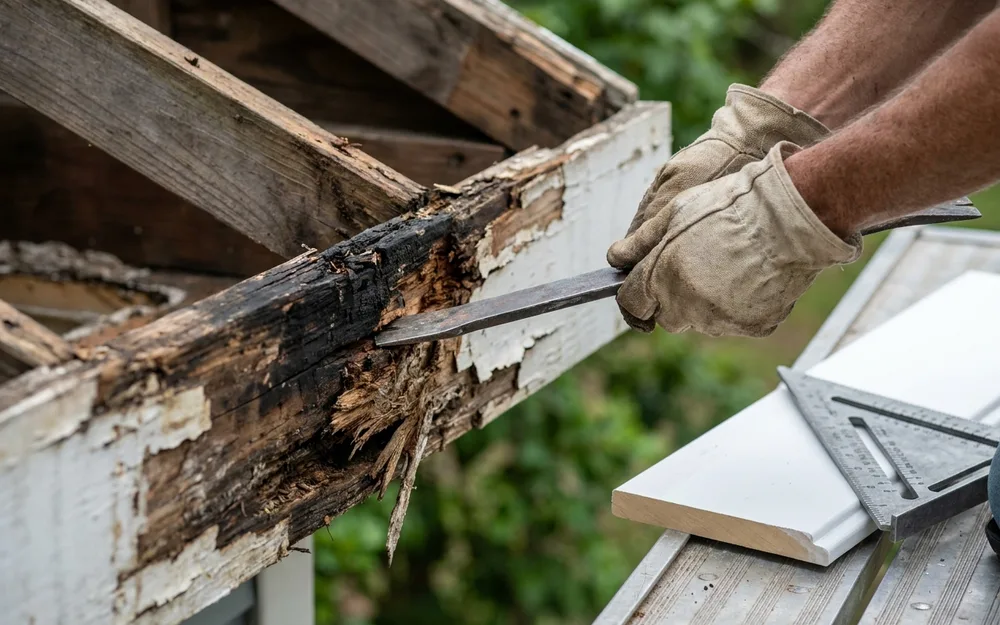
You had the fascia fixed two years ago. It looked good. Now there is a soft spot in almost the same place.
Trim usually rots again because the moisture path that caused it the first time was never closed, not because the repair itself was bad. The two most common repeat causes are a soffit vent painted or insulated shut, which traps moisture on the back of the wood where no one looks, and wood that sits wet and warm long enough for decay fungus to restart. Gulf Coast heat and rain keep trim in that zone longer than an inland climate.
All Types of Painting Remodeling Sheetrock Repair has worked out of Ocean Springs since 2011 and covers Biloxi, Gulfport, Pascagoula, Moss Point and D'Iberville.
Why does a repair fail again in the same spot?
Yes, and almost never because the repair itself was done wrong.
A patch or a new board fails again when the thing that let water or moisture in the first time is still there. That could be an open joint that never got re-sealed. It could also be something nobody thinks to check: a vent opening that got closed off without anyone meaning to close it. The two sections below cover both.
Can a blocked soffit vent cause trim to rot from the inside?
Yes, and this is the cause a repaint never fixes.
Soffit panels have small vent openings that let air move through the eave. Over years of repainting, those openings can get filled in with paint. Attic insulation can also shift or get added later. It can cover the same openings from the inside, where nobody sees it from the ground. Either way, the air that should be moving through the eave stops moving.
Warm, humid attic air has nowhere to go once that happens. It condenses on the back of the soffit and fascia instead of venting out. That moisture sits against the wood from the inside. Decay starts there first, not on the painted face everyone can see. A homeowner who repaints the visible trim can watch the same spot fail again a year or two later. The paint job never touched the real problem behind it.
When we refit a soffit run, we keep the vent openings clear on purpose, not just fill the space back in. Our rotten wood repair method checks the vent path along with the wood itself.
What moisture level actually causes wood to rot?
There is a real threshold, and it explains why some repairs hold and others do not.
Penn State Extension states that most wood decay fungi do not thrive once wood moisture content drops below roughly 30 percent. These fungi also grow best between 68 and 90 degrees Fahrenheit. Wood that is kept dry does not decay. Wood that gets wet once and dries out fast usually does not decay either. The problem is wood that stays wet past that line. It has to stay wet long enough, at a temperature the fungus likes, for decay to start or restart.
That is exactly the window Gulf Coast weather sits in for much of the year. NOAA's climate normals for the Pascagoula airport station record 80.3 days a year at or above 90 degrees, alongside regular rain. Trim here spends far more days inside the fungus's preferred range than trim in a drier or cooler climate does. A repair that would sit safely dry for months inland gets tested here again and again.
Is older trim more likely to have this problem?
Often, yes, and it comes down to how the eave was originally built.
Moss Point's housing is the oldest on this route. Its median home dates to 1968, and close to 80 percent of the homes there were built before 1980. Eaves from that era were often built with little or no dedicated soffit venting to begin with. Some had vents once, but the vents got painted over through decades of repaints since. D'Iberville sits at the other end. Its median home dates to 2003, and most of its housing was built in 2000 or later. Codes from that era generally require soffit venting. That newer venting still gets blocked sometimes, usually by insulation added after the house was built. Even so, it starts from a better position than a 1960s eave with no venting at all.
Either way, the age of the trim itself is less important than whether the vent path behind it has ever been checked.
How do you stop trim from rotting again after a repair?
The same way every time, and it includes a step most repaints skip.
Every new board gets primed on all six faces, including the cut ends, before it goes up. That single step is what keeps a new repair from rotting again from the same cut edge. New wood gets fastened into solid framing, not into whatever is left of the old soft wood. The fasteners are corrosion resistant and set below the surface. On any soffit or fascia run, the vent openings get checked and kept clear, not just painted over and reassembled.
A repaint by itself does not do any of that. It looks finished, and it can still be sitting on a blocked vent or an unsealed cut end underneath. Get a written estimate that checks the vent path, not just the wood you can already see.
Get the vent path checked, not just the paint
A repair that keeps failing in the same spot is not bad luck. It is a moisture path that was never actually closed. How to tell if a soft spot needs a patch or a full replacement covers the test for the wood itself, and this post covers the vent path behind it, which is the part a repaint alone will never fix.
That combination shows up often on the older eaves common around Moss Point, where original soffit venting was often minimal to begin with.
We work Monday to Saturday, 6:00 AM to 8:30 PM, and Sunday, 6:00 AM to 8:00 PM. Call (228) 355-8497 and we will check the vent path along with the wood, not just repaint over both.
Talk to All Types of Painting Remodeling Sheetrock Repair
Questions about your home repair and remodeling job? We serve Ocean Springs and the surrounding area with honest, upfront advice.
Related articles
FAQ
Related questions
Can blocked soffit vents cause wood rot?
Yes. Paint or attic insulation over a soffit vent opening stops the airflow that carries moisture out of the eave. Warm, humid air condenses on the back of the soffit and fascia instead, and that is enough moisture to start decay from the inside, where nobody is looking.
How do I know if my repair is failing again or if it's a new spot?
Probe it the same way we do. Press an awl or a small screwdriver into the old repair and into the wood just past it. Sound wood resists. If the tip sinks into the old patch itself, that repair failed. If it sinks in past the edge of the patch, water found a new path in nearby, often the same joint that let it in the first time.
Does painting over trim stop it from rotting?
Not if a vent opening is what got painted shut. A repaint can look perfect from the ground and still seal a soffit vent closed, which traps moisture on the attic side instead of keeping it out. Painting the visible face never fixes a blocked vent behind it.